-
Seoul, the dynamic capital of South Korea, has long been synonymous with urban development.
From high-rise luxurious apartments to environmentally-friendly design projects, the city has rapidly transformed into a bustling and congested concrete jungle.
As a megacity that boasts the world’s second largest metropolitan area with more than 25 million inhabitants, Seoul also suffers from housing shortages, a chronic problem throughout its history. As such, spacious apartments in trendy neighborhoods have long been popular - and in high demand - with the public. -
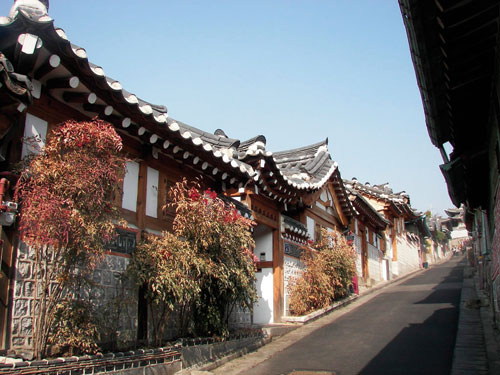
However, recently, traditional Korean homes, or hanoks, have been making a comeback among lifestyle trendsetters. As a testament to their rising popularity, some municipal governments have even encouraged their residents to build more hanoks, and are providing subsidies and low-interest, long-term loans. The prices of existing hanoks, such as the ones in Gahoe-dong, northern Seoul, have nearly doubled in the past half-decade. Although it’s unclear what’s fueling this trend, these traditional homes are thought to help cure atopic diseases and asthma due to its natural materials and high-quality ventilation.
In light of the surging interest in hanoks, The Teen TImes compiled a guide to help people learn about the origins and structures of Korea’s traditional homes.
History of Hanoks
During the Paleolithic age, people lived in caves or built houses with boughs, leaves, and leather. During the Neolithic Age, houses evolved into “dugout huts.” Men dug the ground, erected pillars, placed rafters, and covered the roof with grass and straw thatches. Men from the Bronze Age made some improvements to this structure by adding pillars inside the house. However, these houses easily flooded when it rained because they were located semi-underground. In the Iron Age, roofs were covered with tiles, or giwa, in Korean. This form is the closest to modern hanoks. The pillars and beams were made of wood. The walls had wooden props and were covered with red clay mixed with straw. The floors were covered with hanji, or paper made from mulberry trees. Layers of soybean oil on the paper made them waterproof. The house also included an ondol, or a heating system.
Hanok Structure
Traditional hanoks include bedrooms, a kitchen, a living room, a barn, a bathroom, a yard, a fence, and a gate. Depending on the owner’s social status, the rooms were arranged differently. For example, rich families had several buildings inside their complex and assigned them with residents according to gender, age, and social status. Owners used the main building while farmhands and maids occupied the buildings closest to the gate so that they could quickly greet guests.
The rooms also differed based on geography. Houses in northern Korea, for example, had rooms shaped like a di-geut or mi-eum (Hangul characters) to trap heat. They also had lower roofs for the same reason. In the south, rooms were arranged in one line, while regions in central Korea had rooms arranged like a gi-yeok. Hanoks also had a larger number of doors and windows, compared to Western-style houses.
Hanoks and Location
Koreans favored a location with mountains in the background and water, or fields, in the front. They also preferred houses facing southeast because in Korea, wind blows from the southeast in the summer and from the northwest in the winter.
Ondols
The word ondol literally means “warm stone.” These stones were installed under the floor. When a house was built, a ditch was dug below the floor and covered with flat stones, called gudeul, in Korean. When the furnace was lit, the heat and smoke passed through the gudeul to deliver the heat.
Disadvantages
The biggest downside of hanoks is that residents often feel cold during the winter. This is largely due to the many windows and doors. Since hanoks are made of wood, they are vulnerable to fires. Its construction also requires more workers and is more expensive.
Modern Hanoks
Modern hanoks have a stand-up kitchen and a flushable toilet. Windows and doors have double layers and most of the living rooms have sliding glass windows to block the cold.
다시 인기를 얻고 있는 한옥
한국의 역동적인 수도인 서울은 오랫동안 도시 개발과 비슷한 의미였다. 화려한 고층 아파트에서부터 친환경적인 디자인 프로젝트까지, 서울은 북적거리고 혼잡한 시멘트 정글로 빠르게 변해왔다.
2천5백만 명 이상의 사람이 거주하는 세계에서 두 번째로 큰 대도시를 자랑하는 거대도시로, 서울은 유사 이래로 주택부족과 만성적인 문제들을 경험하고 있다. 그래서, 좋은 지역의 넓은 아파트는 사람들에게 오랫동안 인기가 있었으며 수요도 높았다.
그러나, 최근, 전통적인 한국 가옥, 또는 한옥이 생활 방식에 있어서 유행의 선도자로 다시 자리잡고 있다.
한옥의 인기가 증가하고 있는 것에 대한 증거로, 몇몇 지방자치 정부는 심지어는 주민들에게 한옥 건축을 권장하고 있으며, 보조금과 낮은 이자, 그리고 장기 대출을 제공하고 있다.
서울의 북쪽에 자리한 가회동에 있는 것 같은 현존하는 한옥의 가격은 지난 5년 동안 거의 두 배로 올랐다.
왜 한옥이 인기가 있는지 그 이유는 확실하지 않지만, 이러한 전통 가옥은 자연 자료와 통풍이 좋아서 아토피와 천식을 치료하는데 도움이 되는 것으로 여겨진다.
한옥에 대한 관심 증가로, 틴타임즈가 한국 전통 가옥의 기원과 구조에 대해 배울 수 있도록 가이드를 만들었다.
한옥의 역사
구석기시대 동안, 사람들은 동굴에 살거나 나뭇가지, 잎, 그리고 가죽으로 집을 짓고 살았다. 신석기 시대에, 집은 “움집”으로 진화했다.
사람들은 땅을 파고, 기둥을 세우고, 서까래를 깔고, 풀과 짚으로 지붕을 덮었다. 청동기 시대 사람들은 집 안에 기둥을 더해 이 구조물(움집)을 향상시켰다. 그러나, 이러한 집은 반 지하에 위치해서 비가 오면 쉽게 침수되었다.
철기 시대에는, 한국에서는 지붕을 타일이나 기와로 했다. 이 형태는 현대의 한옥에 가장 가깝다. 기둥은 나무로 만들어졌다. 벽은 나무 버팀목으로 했으며 짚을 섞은 붉은 점토로 덮었다.
마루는 한지나 뽕나무로 만든 종이로 덮었다. 종이의 콩기름 층이 방수 역할을 했다.
한옥은 또한 난방시설로 온돌을 사용했다.
한옥의 구조
전통적인 한옥은 침실, 주방, 거실, 헛간, 화장실, 마당, 울타리, 문을 가지고 있다. 주인의 사회적 지위에 따라, 방은 배치가 달랐다.
예를 들면, 부유한 가족은 가옥 안에 여러 건물이 있었고 거주자의 성별, 나이, 사회적 지위에 따라 배치했다. 주인은 주요 건물을 사용했으며 일꾼들이나 하녀들은 손님들을 빨리 맞을 수 있도록 문에 가까운 건물을 사용했다.
방은 또한 지리에 따라 달랐다. 한국의 북부지방의 집들의 방은, 예를 들면, 열을 보존하기 위해 한글의 디귿(ㄷ)자 혹은 미음(ㅁ)자 모양의 방을 만들었다.
또한 같은 이유로 북쪽의 집들은 지붕이 낮았다. 남쪽에서는, 방들이 일렬로 배치되었는데, 반면에 중부지방에서는 방들이 기억(ㄱ) 자 모양으로 배치했다. 한옥은 또한 서구형 집들에 비해 문과 창문의 수가 많았다.
한옥 그리고 위치
한국인들은 산을 등지고 앞에 물이나 들판이 있는 위치를 좋아했다. 한국인들은 또한 동남향을 좋아했는데, 한국에서는 바람이 여름에는 동남쪽에서 불고 겨울에서는 북서쪽에서 불기 때문이다.
온돌
온돌은 글자 그대로 “따뜻한 돌”을 의미한다. 이 돌은 마루 밑에 설치되었다. 집이 세워질 때, 배수로는 마루 밑에 위치했는데 그것은 평평한 돌로 덮어졌으며 이것은 한국어로 구들이라고 불리었다. 아궁이에 불이 지펴지면, 그 열과 연기는 구들을 통과해 열을 전달했다.
단점
한옥의 가장 큰 단점은 겨울 동안 춥다는 것이다. 이것은 창문과 문이 많기 때문이다. 한옥은 나무로 만들어지기 때문에, 불에 약하다. 한옥을 짓기 위해서는 일손이 많이 필요하며 그래서 더 비싸다.
현대식 한옥
현대식 한옥에는 입식 부엌과 수세식 화장실이 있다. 창문과 문은 이중이며 거실은 추위를 막기 위해 미닫이 창문으로 되어 있다.
※틴타임즈 기사 제공 -
Traditional Houses Making a Comeback