-
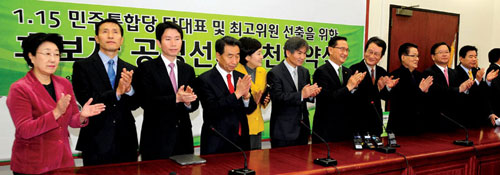
As the country gears up for the upcoming general and presidential elections, both of which will be held later this year, rival political parties are scrambling to woo voters in what could be an epic showdown between the ruling Grand National Party (GNP)한나라당 and the Democratic Unity Party (DUP)민주통합당.
-
The two parties are primed for an all-out war, as the elections come amid a growing crisis in party politics due to deepening suspicion and distrust of politicians. In addition, the lingering uncertainty following the death of North Korean leader Kim Jong-il has further fueled the battle. Political pundits and observers agree that this year’s political showdown will be much fiercer and more unpredictable, as it is the first time in 20 years that voters will pick legislators and a president in the same year.
The embattled GNP recently launched an interim leadership that looks to bring new life into the conservative party. The party may even go so far as to change its name and remove lawmakers allied to President Lee Myung-bak. During a parliamentary session, the GNP emergency leadership council decided to take away immunity from lawmakers who were involved in the cyber attack scandal. It is also considering an “anything but Lee” campaign in an effort to distance the party from the president. These measures, as some point out, show that the party is serious about reinventing itself and cutting ties with those who have either failed to meet public expectations or those who have lost touch with voters.
Opposition parties have also taken bold steps to reorganize themselves by seeking mergers with other political and civic groups. The former main opposition Democratic Party, for example, succeeded in launching a new party. the DUP, had a merger with the Federation of Korean Trade Unions (FKTU)한국노동조합총연맹 and the Citizens Unity Party. The emerging party mainly consists of civic activists and followers of the late President Roh Moo-hyun. Later next week, the DUP will hold a national convention to elect six members, including the party leader, of its decision-making Supreme Council. Minor liberal parties have also formed alliances with other political bodies to create another liberal front.
The appointment of Kim’s youngest son, Kim Jong-un, as the new leader of the reclusive North, and future inter-Korean relations will be critical factors that will determine the rise and fall of political parties in 2012. A poll conducted last month showed that GNP interim leader Park Geun-hye has been regaining popularity as a presidential candidate after the death of Kim, who died on December 17. The poll asked 1000 people who they thought was the most ideal person to lead the country following Kim’s death. Park came in first with 29.8 percent of the votes. Doctor-turned-IT mogul Ahn Cheol-soo came in second with only 13.2 percent.
Political pundits have noted that the fate of the GNP will be largely determined on how successful Park is at reforming her troubled party ahead of the elections. The National Assembly and presidential elections are in April and December respectively. Many are skeptical as to whether or not Park, who largely avoided handling party affairs for the past four years, will be able to properly respond to the increasingly dynamic political situation. The GNP must also make its pitch to voters in their 20s, 30s, and 40s, most of who supported liberal candidates in last year’s Seoul mayoral election. Experts believe that this expressed their displeasure with the conservative government’s pro-wealthy policy.
In addition, if Ahn eventually decided to run in December’s presidential elections, it could shift the political landscape and encourage great political participation from civic groups and individuals. Ahn became an overnight political sensation after he first expressed his intent to run in October’s by-elections. He quickly dropped out to support lawyer-turned-civic activist Park Won-soon. It was reported that he has been receiving private lessons on political affairs from scholars and experts since November last year.
최후 결전에 박차를 가하는 한국의 정당들
한국은 올해 말에 열릴 예정인 다가오는 총선과 대통령 선거에 박차를 가하면서, 라이벌 정당들은 한나라당과 민주통합당 간의 장대한 최후 결전이 있는 유권자들에게 지지를 호소하기 위해 재빨리 움직이고 있다.
깊어가는 의혹과 정치인들의 불신 때문에 정당 정치에 위기가 증가하는 가운데 선거가 있기 때문에 그 두 정당은 총력전을 준비하고 있다. 게다가, 북한 지도자 김정일의 죽음에 따른 오래 계속되는 불확실성은 그 싸움을 더욱 더 부채질했다.
정치 전문가들과 관찰자들은 유권자들이 같은 해에 국회의원들과 대통령을 뽑는 것이 20년 만에 처음 있는 일이기 때문에 올해의 정치 최후 결전이 훨씬 더 격렬하고 예측할 수 없을 것이라는데 동의하고 있다.
궁지에 몰린 한나라당은 최근 보수당에 새로운 삶을 가져올 것으로 기대하게 하는 임시 대표직을 시작했다. 그 정당은 심지어 이름을 바꿀지도 모르고 이명박 대통령에 결합한 국회의원들을 제거할지도 모른다.
국회 회기 동안, 한나라당 임시 대표직 회의에서 사이버 공격 파문에 관련된 국회의원들의 면책특권을 없애기로 결정했다. 그것은 또한 이명박 대통령 당에 관여하지 않게 하려는 노력의 일환으로 “이명박 대통령은 결코 아닌’이라는 캠페인을 고려하고 있다.
이러한 조치들은 한나라당이 스스로 다른 모습을 보여주고 대중의 기대를 충족시키기 위해 실패한 사람들이나 유권자들과 접촉이 없는 사람들과의 유대관계를 단절시키는데 진지하다는 것을 보여주고 있다.
야당들 역시 다른 정당들과 시민 단체들과 합병을 추구함으로써 그들 스스로 재편성하려는 대담한 조치를 취했다. 전 야당 민주당 예를 들면 새로운 당을 시작하는데 성공했다. 민주통합당은 한국노동조합총연맹과 시민연합당과 병합했다.
그 신흥당은 주로 시민 운동가들과 故 노무현 대통령의 추종자들로 구성된다. 다음 주 말에, 민주통합당은 의사 결정하는 최고회의의 정당 지도자를 포함하여 6명을 선출하기 위해 전당대회를 열 예정이다. 소수의 자유당들 역시 또 다른 자유 단체를 생성하기 위해 다른 정당들과 동맹을 맺었다.
은둔 국가 북한의 새 지도자로 故 김정일 위원장의 셋째 아들 김정은의 임명과 미래의 남북한 관계는 2012년에 정당들의 흥망을 결정지을 핵심 요소일 것이다.
지난 달 실시된 여론조사에서 한나라당 임시 지도자 박근혜가 12월 17일에 죽은 김정일의 죽음 이후 대통령 후보로 인기를 다시 얻을 것이라고 나왔다.
그 여론조사는 김정일 사망에 따라 누가 한국을 이끌만한 가장 이상적인 사람이라고 생각하는지 천 명의 사람들에게 물었다. 박근혜가 유권자 표 중 29.8%로 1위에 올랐다. 의사에서 IT계 거물로 전환한 안철수는 겨우 13.2%로 2위에 올랐다.
정치 전문가들은 한나라당의 운명은 박근혜가 선거 전에 곤란에 빠진 당을 개혁하는데 얼마나 성공하는지에 크게 달려있을 것이라고 언급했다. 국회 선거와 대통령 선거는 각각 4월과 12월에 있다.
많은 사람들은 지난 4년간 당 문제를 처리하는 것을 주로 회피한 박근혜가 점점 더 역동적인 정치 상황에 적절히 대응할 것인지의 여부에는 회의적이다.
한나라당은 또한 작년 서울 시장 선거에서 대부분 자유당 후보를 지지한 20대, 30대, 40대의 유권자들에게 홍보를 해야만 한다. 전문가들은 이것이 보수적인 정부의 전 부 정책에 불만을 표하고 있다고 믿고 있다.
게다가, 안철수가 결국 12월 대통령 선거에 출마하기로 결정한다면, 정치판을 바꾸고 시민 단체와 시민들의 정치적 참여를 장려할 수 있다. 안철수는 그가 10월 보궐 선거에 출마할 의도를 먼저 표한 이후 하룻밤 사이에 정치적 선풍을 일으키는 사람이 되었다.
그는 신속히 변호사에서 시민 운동가로 변모한 박원순을 지지하기 위해 물러났다. 그는 작년 11월 이후 학교와 전문가로부터 정치적 문제에 사적으로 조언을 받아왔다고 보고되었다.
※틴타임즈 기사 제공 -
Nation’s Political Parties Gearing Up for Epic Showdown