-
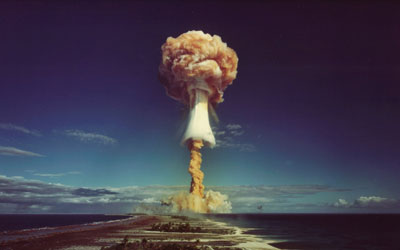
The recent catastrophe in Japan is making many wonder about the dangers of nuclear power. In simple terms, a nuclear power plant can not cause a nuclear explosion. However, the radioactivity which is the same as that result from an atomic bomb is just as dangerous. Although it is impossible for a nuclear power plant to explode like an atom bomb, it’s interesting to explore the basis.
The key in nuclear power is uranium. When you take a lump of uranium, and put this lump in a chain reaction, unimaginable amount of energy will be released at a fraction of a second.
Fortunately, the lump of uranium has to be very large to get this explosion to happen. Here’s why; the principle behind the chain reaction is that the fission of a uranium atom by shooting a neutron into it produces several more neutrons, which can fission other atoms. If the lump of uranium is small, too many neutrons are lost to the outside to keep the reaction going.
The original research into the possibility of making a weapon indicated that about a ton of material would be needed. In fact, it is believed that the German bomb program during World War II faltered on this point; 2000 pounds of uranium-235 could not be produced before the war would end. The American program eventually found a way to focus neutrons back into the lump of uranium so that a bomb only required a hundred pounds of U-235. -
The products of fission in an atomic bomb includes a large number of elements in many isotopes. As these products break down by radioactive emissions, they do a substantial part of the damage from the bomb. And because some of the radioactive fission products have long half-lives (they last a long time in the environment), their effects can be felt many years after the initial explosion.
No need for confusion. A nuclear power plant operates on the same principles as a bomb, but the difference would be that fission process is controlled to allow an acceptably slow release of energy which can be turned into heat and then electricity. The uranium cannot explode like a bomb. First of all, the uranium is purified much less in a power plant than in a bomb; U-235 makes up only about 5% of the uranium in a power plant (naturally occurring uranium has less than 1% U-235) while a bomb requires 90% purification. In addition, the amounts of uranium in power production are not sufficient for a bomb without the sophisticated focusing mechanism.
We must notice the fission products of a nuclear power plant are exactly the same as those of a nuclear explosion. These fission products, most of them dangerously radioactive, are considered a ‘waste’ because they are hard to deal with. In the best case, they are cooled (the radioactive process creates a lot of heat), and eventually buried. The ‘waste’ from a nuclear explosion can never be captured, and remains in the environment until it decays.
So, let’s look at this in the long run. The primary harmful products in nuclear waste are strontium-90 and cesium-137; these are produced in considerable quantities and have a half-life of about 30 years. That means these radioactive elements remain in the environment for a very long time. Strontium-90 is particularly dangerous because it seeks the human bone and can cause bone cancer.
Let’s deal with the concern in pretty much everyone’s mind these days. The emission from the recent nuclear accident in Japan is relatively small compared to the fallout from a bomb. Then again, many authorities believe there never is any safe level of radiation, and that means any emission is too much.
원자력 발전소와 원자 폭탄
최근 일본의 참사는 원자력 위험에 대한 많은 궁금증을 일으키고 있다. 간단히 말해, 원자력 발전소는 핵폭발을 유발할 수 없다. 하지만, 원자 폭탄에서 발생하는 것과 마찬가지로 방사선 역시 위험하다. 비록 원자력 발전소가 원자폭탄처럼 폭발하기란 불가능하지만, 그 근거를 탐험하는 것은 흥미롭다.
원자력 발전소의 핵심은 우라늄이다. 여러분이 우라늄 한 덩어리를 가져가, 그것이 연쇄 반응을 일으킬 때, 상상도 할 수 없는 양의 에너지가 순식간에 방출될 것이다.
다행히도, 우라늄 덩어리는 폭발이 일어나는 데 매우 큰 역할을 한다. 여기 그 이유가 있다; 연쇄 반응 이면의 원리는 그것에 중성자를 발사함으로써 우라늄 원자의 핵분열은 좀 더 많은 중성자들을 생산한다는 것이다. 이는 다른 원자들을 분열시킬 수 있다. 만약 우라늄 덩어리가 작다면, 엄청난 중성자들이 그 반응이 계속해서 일어나도록 하여 바깥으로 잃게 된다.
무기를 만드는 가능성에 대한 원래 연구는 약 1톤의 재료가 요구될 것이라고 나왔다. 사실, 제 2차 세계 대전 동안 독일의 폭탄 프로그램이 이 시점에서 불안정해졌다고 전해진다; 우라늄 235의 2천 파운드는 그 전쟁이 끝나기 전에 생산될 수 없었다. 결국 미국의 프로그램은 우라늄 덩어리에 중성자를 집중시키는 방법을 발견하여 폭탄이 우라늄 235의 100파운드만을 필요로 했다.
원자 폭탄의 핵분열 산물은 많은 동위원소들 중 상당한 수의 요소들을 포함한다. 이 산물들이 방사선 방출에 의해 분해됐을 때, 그것들은 폭탄으로부터 상당 부분이 손상된다. 그리고 방사선 핵분열 산물이 긴 반감기를 갖고 있기 때문에 초기의 폭발 이후 수년간 그것들은 영향 받았다.
혼란스러워 할 필요는 없다. 원자력 발전소는 폭탄과 마찬가지로 비슷한 원리로 작용하지만, 그 차이는 핵분열 진행은 에너지의 받아들일 수 있을 정도로 속도가 느린 방출을 허용하도록 통제 받는다. 이는 열로, 나아가 전기로 바뀔 수 있다. 우선, 우라늄은 폭탄보다 원자력 발전소에서 훨씬 덜 정제된다; 폭탄이 90% 정제가 필요한 반면, 우라늄 235는 원자력 발전소에서 약 5%의 우라늄으로 구성된다(자연적으로 생기는 우라늄은 우라늄 235보다 1% 부족하다). 게다가, 에너지 생산에서 우라늄의 양은 정교한 초점 조정 장치 없이는 폭탄으로 충분하지 않다.
우리는 원자력 발전소의 핵분열 산물이 정확하게 핵폭발의 산물과 같다는 것에 주목해야 한다. 위태로운 방사선의 이러한 핵분열 산물 대부분이 처리하기 힘들기 때문에 ‘폐기물’로 간주된다. 잘되어야, 그것들은 냉각되고(방사선 진행은 많은 열을 창출한다) 결국 묻힌다. 핵폭발로 인한 ‘폐기물’은 결코 포획될 수 없고, 그것이 부패할 때까지 환경에 남아 있는다.
그렇다면, 이것을 장기적으로 보자. 핵 폐기물의 주된 해로운 산물은 스트론튬 90과 세슘 137이다; 이것들은 상당한 양이 생산되고 약 30년의 반감기를 갖고 있다. 그것은 이러한 방사선 요소들이 매우 오랫동안 환경에 남아 있다는 것을 의미한다. 스트론튬 90이 특히 위험하다. 왜냐하면 인간의 뼈를 추구하고 골수암을 유발할 수 있기 때문이다.
요즘 모든 사람의 마음속에 가장 염려되는 것을 다뤄보자. 최근 일본에서 핵 사고 방출은 폭탄에서 비롯된 낙진에 비해 비교적 작다. 한편, 많은 당국들은 방사선에 어떤 수준도 안전하지 않다고 믿는다. 이는 어떤 방출도 과도하다는 것을 의미한다.
※틴타임즈 기사 제공 -
Nuclear Power Plant vs. Atomic Bomb