-
One year ago engineers from NASA demonstrated that although in the past their agency has been troubled by accidents, funding cuts and indecisiveness they still have the power to harness dreams and go where people previously couldn’t even imagine. After all it was less than 70 years ago that we first made our way into space; there is life in NASA yet.
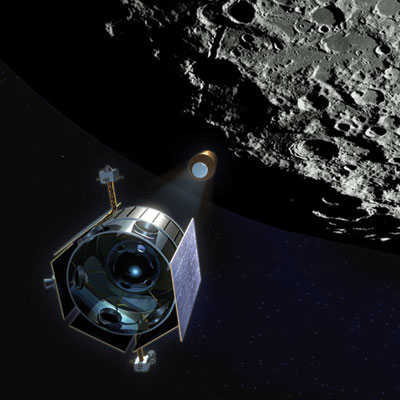
Last October NASA engineers and scientists proved they are still contenders in the ever expanding space flight industry with a Moon mission. They launched an AtlasV rocket towards the Moon, aimed specifically at the Cabeus crater, where it then shed its spent upper stage to reveal two smaller space craft, the LCROSS (Lunar Crater Observation and Sensing Satellite) and the LRO (Lunar Reconnaissance Orbiter).
The rocket launched at a speed of 5,600 mph, inspiring many space fanatics and amateur astronomers to stay up late and watch the launch through their telescopes. While visually the launch may not have been the science fiction extravaganza they anticipated, in technical terms in mission was a success. -
First the spent rocket impacted into the Moon, sending up a cloud of dust into the atmosphere. The LCROSS then flew through the dust plume and analyzed it from the inside out as the LRO watched from 30 miles away. Recent papers, published last month revealed that the mission was scientifically more spectacular than anyone could have hoped.
While previous missions such as the Apollo flights had visited the Moon in the past few decades it turns out they were not traveling to its most exciting part. While these missions headed for the sterile, desert-like midlands, it is the craters such as Cabeus in the polar-regions that hold the true wonders, preserved at temperatures of minus 390 degrees F.
The biggest surprise was water and lots of it. The crater in question actually holds 1 billion gallons of water in its soil, in addition to a host of elements including carbon monoxide and dioxide, ammonia, sodium, mercury, silver, sulfur and methane. Water is probably the most exciting though, because with this a sustainable lunar base could be set up, without have the worry of transferring expensive Earth water to the Moon. Also water’s components, oxygen and hydrogen, would be crucial for survival - oxygen for obvious reasons, while hydrogen could provide rocket fuel.
However, while this discovery will no doubt inspire many a movie and science fiction novel due to the possibilities of using this water to colonize the Moon, reality may be a tad further off. The primarily set back will be the Obama administration’s decision to cancel NASA’s plans for a manned return to the moon in the next decade, opting instead for plans that include a manned landing on a near-Earth asteroid and an eventual mission to Mars.
Maybe Obama and his government should reconsider. After all if they don’t somebody else will - India says it will attempt a Moon landing in 2020 and China says it will do the same in 2025. Either way somebody will be making use of the Moon’s water.
달 탐사를 계속하는 미 항공 우주국 -
-
일년 전 미 항공 우주국의 기술자들은 비록 과거에 그들이 우연히 자금 삭감과 우유부단함으로 곤란함을 겪었더라도, 그들은 여전히 사람들이 이전에는 상상조차 하지 못했던 곳에 가는 것을 꿈꾸는 것을 이용할 힘을 가지고 있다는 것을 증명해 보였다.
결국 우리가 우주에 첫 발을 내디딘 것은 70년도 되지 않았다; 미 항공 우주국에는 아직 생명이 있다.
지난 10월 NASA 기술자들과 과학자들은 그들이 여전히 달 임무와 함께 확장되고 있는 우주선 산업에 경쟁자들이라는 것을 입증해 보였다. 그들은 Atlas v라는 로켓을 달에 발사했는데, 특별히 Cabeus분화구를 겨냥했다. 로켓은 윗 부분을 벗어내고 두 개의 작은 우주선을 드러냈다, 그것은 LCROSS와 LRO였다.
그 로켓은 시속 5600마일로 발사되었는데, 많은 우주 광들과 아마추어 천문학자들은 이로 인해 밤 늦게까지 자지 못하고 망원경으로 그 발사를 지켜보았다. 그 발사가 그들이 기대했던 것 같이 과학 공상 소설의 화려한 것은 아니었지만 기술적으로 그것은 성공적이었다.
처음 사용된 로켓은 공기 중에 많은 먼지를 불러 일으키며 달과 충돌했다. LRO는 30마일 떨어진 곳에서 지켜보던 반면 LCROSS는 먼지 기둥을 통해 흘러 들어 안에서 밖으로 그것들을 분석했다. 지난달 발간된 최근의 논문들은 그 임무는 바랬던 것 이상으로 과학적으로 장관을 이루었다고 밝혔다.
지난 몇 십 년 전 달을 방문한 아폴로호의 임무는 가장 흥미로운 부분을 탐사하지 않은 것으로 밝혀졌다. 이러한 임무가 불모의 사막과 같은 중부지방을 향한 반면, 진정 놀라운 것을 가지고 있는 것은 Cabeus와 같은 화씨 영하 390도로 보존된 극지방의 분화구이다.
가장 놀라운 것은 많은 물이었다. 의문의 분화구는 사실 10억 갤런의 물을 그 토양에 가지고 있다, 게다가 일산화 탄소, 이산화물, 암모니아, 나트륨, 수은, 유황, 메탄을 포함하고 있다. 그래도 물은 가장 흥미로운 것이다, 왜냐하면 이것은 지구에서 달로 비싼 물을 옮길 걱정 없이 지속 가능한 달의 기지를 세울 수 있는 것을 의미하기 때문이다. 또한 물의 요소인 산소와 수소는 생존에 중요한 요소이다- 산소는 이유가 명백하고, 수소는 로켓 연료를 제공할 수 있다.
그러나, 이러한 발견은 의심의 여지 없이 많은 사람들을 고무시킬 반면, 영화와 공상과학소설은 달을 식민지 하기 위해 이 물을 사용할 가능성으로, 현실은 조금 다를 지도 모른다. 주요한 차질은 다음 10년 후에 달에 사람이 탑승한 우주선을 보낼 것이라는 NASA의 계획을 취소 하기로 한 오바마 정부의 결정일 것이다, 대신에 오바마 정부는 지구 가까이의 소행성과 화성 탐사를 선택했다.
오바마 정부는 재고 해야 할 지 모른다. 결국 그들이 하지 않으면 누군가가 할 것이다? 인도는 2020년에 중국은 2025년에 달 상륙을 시도할 것이라 말한다. 어느 쪽이든 누군가가 달의 물을 이용할 것이다.
※틴타임즈 기사 제공 -
NASA Keeps One Foot on the Moon (달 탐사를 계속하는 미 항공 우주국)