-
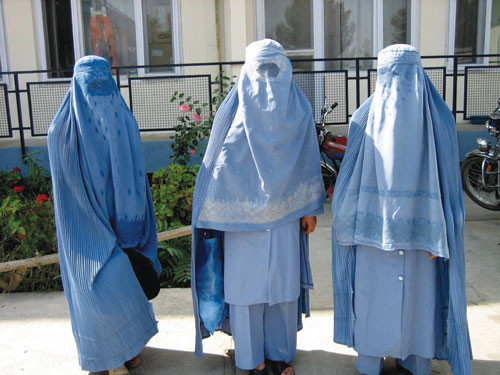
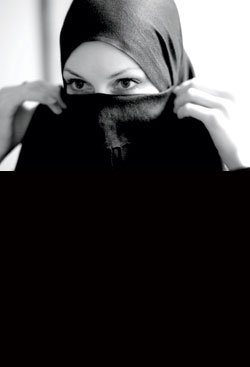
In a controversial move Syria has banned female students and teachers within the nation from wearing the full Islamic veil. This special item of clothing, called a niqab, covers all of the wearer’s face, revealing only a woman’s eyes. The move to ban the veil is being viewed as a political action by the controlling non-religious government, in accordance with the governments of many European counties. Unsurprisingly the move has drawn a lot of heat and angered many Muslims.
The recent ban affects both public and private institutions of education. Hundreds of niqab wearing teachers at state run schools were transferred out of the class room and into office jobs as a result. Furthermore this ban is a rare instance of Syria’s hard-line government choosing to agree with the governments of many European nations, sharing the view that the veil presents a threat. However the headscarf worn my many Muslim women (the hijab) is not affected by the ban. -
Syria has become the most recent addition to a series of nations who have banned the nigab, seen by many as a symbol of Islamic fundamentalism. Other nations where the niqab is popular, such as Egypt and Lebanon, have attempted to spread rumors about robbers using veils to attempt to discourage people from wearing them.
A government official in the Syrian capital Damascus told reporters that, “We have given directives to all universities to ban niqab-wearing women from registering.” In a similar fashion Turkey has banned headscarves in universities, amid claims that allowing them in schools is an attack on the nation’s religion-free modern constitution.
Meanwhile the veil has become a hot topic all around Europe, especially in France, Spain, Belgium and the Netherlands. A recent controversial move by the French government was to ban the veil and the burqa, which covers even a woman’s eyes. The French government argued this was to protect French values but many of the nation’s Muslims, who are French citizens, found this move to be racist and ignorant. Previously France had banned head scarves and veils in class rooms around the country.
Those who are against the bans argue that such moves deny freedom of religion and personal choice. Many young female students within Syria have confidentially told the press that they hope to continue wearing the veil despite the ban. One student told reporters that the veil is a way of life. “The niqab is a religious obligation, I cannot go without it” she said.
In European nations, in particular France, discussions over the veil and other religious issues have been long and drawn out. On the one hand the French government is keen to hold onto their traditional French way of life. Yet on the converse immigration has transformed the nation into a multicultural one and policies need to change to suit this situation. The riots that occurred in France in 2006, sparked by minorities who felt under represented and under acknowledged, was a telling sign of this.
Meanwhile in Middle Eastern nations with predominantly Muslim populations like Syria, arguments over the veil are thought to be rooted in disagreements between the non-Muslim upper classes and the poorer religious lower classes. Although the Syrian government has already enacted the ban it is unlikely this matter will be easily resolved. How Syria deals with this argument could be telling of what other nations will have to face as they continue to grow and diversify.
시리아, 니캅 착용 금지 -
-
많은 논란 속에서 시리아는 여학생들과 교사들이 국내에서 이슬람 베일을 입는 것을 금지했다. 니캅이라고 불리는 의복의 이 특별한 아이템은, 여성들의 눈만 보여주고 얼굴 전체를 덮는다. 그 베일을 금지하려는 운동은 많은 유럽 나라들의 정부에 따르면, 종교적 정부를 조정하려는 정치적 행동으로 간주되고 있다. 놀랄 것도 없이, 그 움직임은 뜨거운 논쟁을 일으키고 많은 회교도들을 화나게 했다.
최근의 금지는 대중과 개별 교육 기관 모두에게 영향을 미친다. 그 결과, 공립학교의 니캅을 입는 수 백 명의 교사들은 교실 밖으로 나와 사무직으로 옮겨졌다. 더군다나, 이러한 금지는 베일이 위협적이라는 많은 유럽국가 정부에 동의하는 것으로 시리아의 강경노선 정부로서는 드문 예이다. 그러나 많은 회교도 여성들이 입는 머리 스카프(히잡)는 금지되지 않았다.
시리아는 가장 최근 많은 이들에게 회교 원리주의로 보여지는 니캅을 금지한 일련의 나라 중 하나가 되었다. 이집트와 레바논같이 니캅이 인기 있는 다른 나라들은, 그것을 입으려는 사람들을 낙담시키기 위해 베일을 착용한 강도들에 대한 소문을 퍼뜨리려 했다.
시리아의 수도 다마스커스의 정부 관계자는 “우리는 모든 대학들에게 니캅을 착용한 여성들이 등록하지 못하게 명령했습니다.”라고 기자들에게 말했다. 비슷한 방법으로, 터키는 학교에서 머리 스카프를 허용하는 것은 국가의 종교적 자유에 대한 현대 헌법에 대한 침해라는 주장 속에서, 대학에서 머리 스카프를 하는 것을 금지했다.
한편, 베일은 유럽 전역에서 그리고 특별히 프랑스, 스페인, 벨기에와 네덜란드에서 핫 토픽이 되었다. 최근 프랑스 정부에 의해 논란이 된 것은 베일과 심지어는 여성의 눈까지 덮는 부르카에 대한 금지였다. 프랑스 정부는 이것은 프랑스의 가치를 보호하기 위한 것이라고 주장했지만, 프랑스 시민인 회교도 국가의 많은 사람들은 이것은 인종 차별적이며 무지막지한 것이라고 말했다. 이전에 프랑스는 교실에서 머리 스카프와 베일을 금지했다.
이러한 금지에 반하는 사람들은 그러한 것은 종교의 자유와 개인의 선택을 부정하는 것이라고 주장한다. 시리아내의 많은 젊은 여학생들은 그들은 금지조치에도 불구하고 계속 베일을 착용하고 싶다고 언론에 말했다. 한학생은 베일은 삶의 한 방법이라고 기자에게 말했다. “니캅은 종교적 의무이고, 이것 없이는 밖에 나갈 수가 없다.”고 그녀는 말했다.
유럽 국가, 특히 프랑스에서는, 베일과 다른 종교적 이슈에 관한 논쟁은 오랫동안 계속됐다. 반면, 프랑스 정부는 그들의 전통적인 프랑스식 삶의 방법을 매우 좋아한다. 그러나 반대로, 이민자들은 그들의 나라를 다문화적인 곳으로 만들었고, 이러한 상황을 변화시킬 정책들이 필요한 것이다. 2006년 프랑스에서 대표되지 않고 인정받지 못하는 소수들에 의해 촉발된 그 폭동은, 이러한 것의 뚜렷한 징후이다.
반면 시리아와 같이 대부분이 회교도인 중동 국가에선, 베일에 관한 논쟁은 회교도가 아닌 상류층과 가난한 종교적 하류층의 불일치에 근간을 두고 있다. 비록 시리아 정부가 이미 그러한 금지조치를 법제화 했다고 해도, 이러한 문제는 쉽게 풀릴 것 같지 않다. 이러한 논쟁을 시리아가 어떻게 다루느냐에 따라서 다른 나라들이 성장하고 다각화할 때 직면해야 할 것들을 말해 줄 수 있을 것이다.
※틴타임즈 기사 제공 -
Syria Bans the Veil (시리아, 니캅 착용 금지)