이벤트
Russia Wins World Cup Bid (월드컵 입찰에 성공한 러시아)
2010/12/14 18:38:02
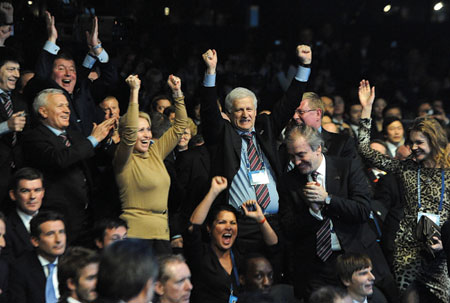
The Russian government and soccer association have been trying hard to maintain a positive image of Russia in the run up to the World Cup in 2018. However, already news is leaking out of potential issues for the upcoming tournament. One of the key problems is racism; people of African or South Asian descents are rarely seen and are not always treated positively, especially in remote areas in Russia and certainly in soccer stadiums.
Recently a soccer club in the city of Lokomotiv made the headlines when its fans “thanked” an English football club for buying Nigerian player Peter Odemwingie because they disliked having an African player on their team. Another African player named Haminu Draman, who comes from Ghana, told reporters it was difficult for colored people to play soccer in Russia. “If you play against some clubs that don’t have blacks in their team, especially in St .Petersburg, it’s crazy,” he said. “I think if the other African countries qualify for the World Cup when it’s hosted by Russia it’s going to be hard for them, unless this kind of thing changes.”
Alexei Sorokin, the head of the Russian bid committee, has insisted that the Russian Soccer Organization is working hard to address these issues. One of the most noticeable policies has been the adoption of a large scale anti-racism program, pledging to “gradually cope with this problem.” Another concern brought up by FIFA, the World Cup’s governing body, is the huge distances between the various Russian cities that will host the competitions; while soccer fans could easily travel around Korea during the 2002 World Cup Russia is a much larger country.
In response the government has unveiled a plan to not only upgrade soccer facilities in 13 different cities but to also build entirely new stadiums. There are also plans to upgrade airports, railways and to construct new hotels. The estimated price of all these developments is expected to be around $6 billion, and the hope is that cities other than the metropolises of Moscow and St. Petersburg will experience rapid growth. “We have all the resources it takes to organize it very well and it will certainly leave a lasting legacy in our huge country and in many neighboring countries as well,” Mr. Sorokin told reporters.
While eight years may seem like a long time the Russian government has a lot of work to get done both in terms of construction and people’s attitudes if it hopes to address all of these issues. The next eight years will indeed make or break the Russian World Cup.
월드컵 입찰에 성공한 러시아
