이벤트
Coastal Roads of Busan ; Galmaet-gil (부산의 해안길 ; 갈매길)
2010/08/24 17:52:23
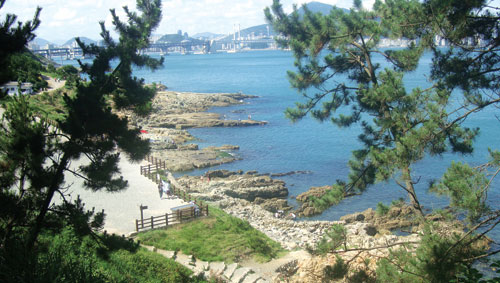
Numerous people have started to pay attention to the value of slowness, and they are choosing a low speed life rather than a high speed one. The reason why terms such as ‘well-being’ and ‘downshifting’ are becoming popular these days, along with activities such as temple stays, is that people are gradually realizing that they can gain happiness through putting these concepts into practice.
Nowadays there is an explosive interest in walking instead of taking cars or buses because people want to discover the value of life through downshifting. Olle-gil in Jeju Island, which is becoming a favorite tourist spot, is also an example of the downshifting trend.
Busan, the largest vacation spot in Korea, has several trails that blend perfectly with the beautiful scenery of nature and the romantic ocean views. There people can escape from their hectic lifestyle and enjoy a leisurely walk. While Jeju Island has Olle-gil and Mt. Jiri has Dulle-gil, Busan has Galmaet-gil, which is a road by the coastline. People can enjoy the breathtaking views while walking up and down Galmaet-gil, which consists of forest-lined dirt and cobbled roads between the coastal cliffs and the ocean. Therefore it has a different atmosphere compared to other famous routes. The coastal roads in Igidae, Yeongdo, and Songdo are similar trails inside a city where you can see spectacular views while enjoying the refreshing smell of the ocean.
Igidae Park is a park located in the foothills of east Mt. Jangsan, which is quite close to the ocean. Its coastal trail is referred to as the masterpiece trail of Busan. The name Igidae originated from the story of two gisaengs - Korean geishas - who threw themselves into the ocean while hugging a Japanese general during the Japanese invasion of Korea in 1592. In the park, uniquely shaped bedrocks lie close to the ocean, and it is considered the best fishing spot in Busan.
The 4km long trail that leads to Oryukdo (a small and famous island) is constructed along the coastal cliffs and the surroundings are as beautiful as the jade green of the sea.
Above all, the air is clear; when smelling the fragrance of the ocean and pines emanating from the old trees while walking along the dirt, rocky, and woodland paths you will inevitably think, “It is beautiful!” Before it was opened to the general public in 1993, access to the area was strictly prohibited as it was a military strategic zone, as shown by the barbed wire that remains. Thus, the natural landscape is well-preserved and rare plants and insects can be found. In addition, dinosaur footprints were found on the beach rock and if you are fortunate enough to be present on a clear day you may even see Daemado (Tsushima Island). This trail is a valuable treasure of Busan as well as a precious marine tourism resource.
The city of Busan embarked on the Green Way Construction Project in June 2009. It is planning to develop the six representative coastal roads as walking routes, consequently transforming them into tourist attractions. Also there will soon be the launch of Green Way Busan, an organization specializing in improving public health by helping to incorporate walking into citizens’ daily lives. The government is also working hard to stimulate the local economy by transforming the beautiful coastal roads into tourist attractions. These coastal roads connect the outskirts of Busan and their own unique coast lines to the sharp cliffs and beaches that unfold beautifully against a magnificent backdrop. These luxurious roads have already been acknowledged as walking trail routes, having been refined after many field investigations by In Do Haing, the biggest walking club in Korea.
Seo In-gyu is a 51-year-old walking club member from Taehwa-dong, Ulsan. He is said to have walked along almost every famous road across the nation. He commented that, “If you don’t walk on these trails in person, you will never know them as they are. By walking on them I found out that Busan coastal roads are the most beautiful roads in the country. I’d like to recommend them to everyone as I can feel the beauty of the ocean, the rocky cliffs, the trees and the dirt, all at the same time.”
Also, 37-year-old Kim Seong-han from Jwa-dong, Busan, often visits the coastal roads with his family on weekends. He was quoted as saying, “Busan residents are fortunate to have the coastal roads located so close to the urban center, where they can relax and meditate.”
Most coastal trails in Busan are located inside the city, just like the trail in Igidae Park. They are easily accessed without going far and boast beautiful scenery with their extraordinary rocky cliffs and the calming mood of the sea. The city of Busan must inform its citizens of the excellent natural heritage along the coast by putting more effort into researching Galmaet-gil. In addition, the city must develop it into a representative attraction for Busan and transform it into a multipurpose tourist resource like Olle-gil of Jeju Island. Therefore the city should also put effort into stimulating demand for both domestic and foreign tourism.
It needs to place promotional pamphlets in various locations including stations, airports, terminals and hotels nationwide, and not only basic information about the coastal roads but also about the delicious restaurants, accommodation, and famous tourist attractions all around Busan. Furthermore, the city must develop the surrounding environment in order for tourists to enjoy leisure activities such as trekking, MTB (mountain biking), green showers and mountain climbing.
We who come to have dizziness as we run fast now must have breath of mind by reducing our speed. So we miss Galmaet-gil in Busan all the more.
