이벤트
Sanctuary Offered to Women Sentenced to Stoning (돌에 맞는 형을 선고 받은 여성들에게 제공된 보호소)
2010/08/17 15:30:58
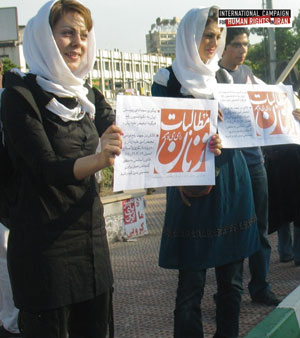
In the U.K. the Foreign Secretary William Hague spoke very negatively of this law. “If the punishment is carried out, it will disgust the watching world,” he said. Now Luiz Inacio Lula da Silva, the president of Brazil, has offered the woman a new home in his country. If she leaves Iran and never goes back she can escape the punishment.
At a recent campaign rally for the next Brazilian president Mr. Lula told the crowd, “I call on Iranian President Mahmoud Ahmadinejad to permit Brazil to grant asylum to this woman.” Officials from Iran are considering the offer and apparently the judges are also considering the sentence. The woman in question pleaded not guilty but the court was not open to hearing her pleas.
Unfortunately this appears to be another case of Muslim law and culture clashing with the culture of others. Recently there was controversy in Indonesia after laws were introduced to ban women from wearing short skirts and western style clothing.
Meanwhile there is currently much debate surrounding the Muslim veil, known as the burka, being banned in European nations. Naturally the issue of a woman being executed in such a painful manner is a much larger issue that Muslim and Western culture clashing over clothing.
On the one hand those in western nations see it as totally barbaric that a woman should be executed, let alone in such a painful and slow way. Yet this is indeed Islamic law (admittedly a very strong interpretation of it) and what laws each nation has is entirely up to the government and the people of that nation.
While the international charter of human rights is supposed to apply to everyone, not everyone believes in it. What emerges is a difficult situation where foreign nations need to maintain respect for Islamic culture and law, but at the same time it needs to be considered whether this is worthy of the life of this woman.
Hopefully a resolution that will please everyone and won’t end in anyone dying will be reached. The recent offer from the Brazilian president could do just that.
돌에 맞는 형을 선고 받은 여성들에게 제공된 보호소
예전에 이란의 한 여성이 간통죄로 돌팔매 사형선고를 받았다. 이 고통스러운 사형 제도는 죄인들이 죽을 때까지 돌에 맞던 성서 시대로 거슬러 올라갈 수 있다. 국제적인 항의로 돌팔매 사형선고는 철회 되었지만, 사형 제도는 남아서 많은 이들은 여성들의 목숨을 위협한다. 현재 브라질은 여성들에게 은신처를 제공해 그녀들이 이란 정부의 손아귀에서 벗어날 수 있게 해준다.
Sakineh Mohammadi Ashtiani는 2006년 이래로 이란의 Tabriz라는 곳에 갇혀있다. 그녀는 결혼 이외의 부적절한 관계를 가져 감옥에 갇혔다. 이전에 그녀는 이미 죄를 지어 채찍에 맞는 벌을 받았었지만, 또 다른 재판에서 그녀는 유죄를 선고 받았다. 그들은 그녀에게 돌팔매에 맞아 죽는 형을 선고했다. 그 결과 그 형벌이 시행되는 것을 막기 위한 국제적인 운동이 벌어졌다.
이란은 그 법을 회교도의 성서인 코란에 근거하고 있고, 그 책에 쓰여진 법을 매우 엄격히 해석해 이용한다. 이란의 법에 따르면, 결혼하지 않고 누군가와 성적인 관계를 맺는 사람은 채찍으로 100대를 맞으며, 결혼한 사람 중 그들의 남편이나 부인 이외의 다른 사람과 관계를 맺으면 돌팔매에 맞아 죽도록 되어 있다.
